What if Your Daily Commute Could Bring Your Family Closer?
Imagine turning your crowded train ride or morning drive into a meaningful connection moment with loved ones—without adding extra time to your day. What if the minutes you already spend traveling could quietly strengthen family bonds, spark shared memories, and bring calm to your routine? This isn’t about more screen time or complicated apps. It’s about reimagining how technology can work gently in the background, transforming isolation into intimacy, one commute at a time. You’re not trying to squeeze more into your schedule—you’re simply letting the time you already have breathe a little differently. And honestly, isn’t that what we all want? A way to feel close, even when life pulls us in different directions?
The Hidden Hours: How We Waste Precious Connection Time
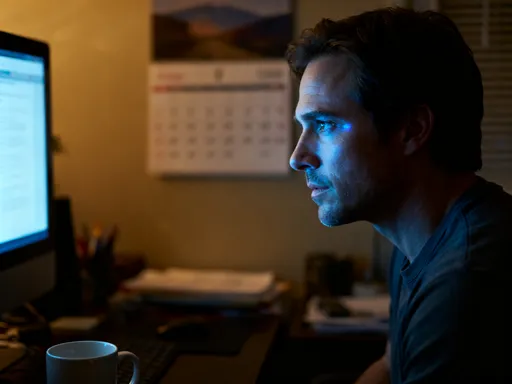
Let’s talk about those hours—the ones that slip away between dropping the kids at school, heading to work, running errands, or coming home after dark. On average, many of us spend between 30 to 90 minutes each day commuting. That’s five to ten hours a week. Think about that. In a month, that’s nearly two full days. And how much of that time do we spend truly present? Most of us scroll through news feeds, catch up on emails, or just zone out, mentally rehearsing our to-do lists. The silence isn’t peaceful—it’s heavy with everything we’re carrying.
But here’s what I’ve noticed: when we come home after a long day, we often feel disconnected. We ask, “How was your day?” and get a one-word answer. We miss the little things—the way our daughter hums when she’s concentrating, or how our partner sighs when they’re trying to be patient. These small moments are the threads of connection, and they’re slipping through our fingers. The commute isn’t just physical distance—it’s emotional space, too. And we’ve been treating it like dead time, when it could actually be one of the most powerful tools we have to stay close.
I remember a conversation with my sister last winter. She told me she hadn’t really talked to her teenage son in weeks—not really talked. Not because they weren’t under the same roof, but because their rhythms didn’t overlap. He left for school before she woke up; she got home after he’d gone to bed. Their only real interaction was a rushed “Did you eat?” at midnight. She felt like a hotel manager, not a mom. That broke my heart. And I realized—so many of us are living like that. We’re present in body, but absent in spirit. The commute, the drive, the train ride—they’re not just transitions. They’re gaps. And those gaps are growing.
But what if we could use that time differently? Not by adding more pressure, not by forcing conversations, but by letting technology help us weave connection into the spaces we already have? What if your morning drive could carry your voice to your child’s ears as they eat breakfast? What if your train ride could deliver a little message from your mom, just when you need it most? It’s not about doing more. It’s about being more present, in the quietest, gentlest ways.
Meet CommuteLink: A Smarter Way to Stay Connected
That’s where the idea of CommuteLink came from—not from a tech lab, but from real life. From kitchen tables and car seats and late-night texts between tired parents. CommuteLink isn’t another app that demands your attention. It doesn’t buzz with notifications or track your screen time. Instead, it’s designed to be soft, almost invisible. It works in the background, like a quiet hum of care. It’s not about live calls or video chats that feel like obligations. It’s about low-pressure, voice-based moments that feel natural—like leaving a note on the fridge, but with your voice.
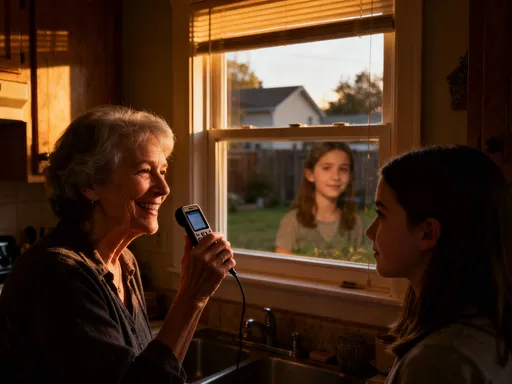
Here’s how it works: you open the app—maybe while waiting for the train or stopped at a red light—and tap the microphone. You say something simple: “Good morning, sweetie. I saw a squirrel doing parkour on the fence today. Made me laugh.” You hit send, and it goes to your family’s shared space. Later, when your daughter opens the app during her walk to school, she hears your voice. She might reply with a song, or a quick story about her math test, or just a giggle. No pressure. No perfect timing. Just presence.
What makes CommuteLink different is that it’s built for real families—families with mismatched schedules, picky eaters, full calendars, and short attention spans. It doesn’t require everyone to be online at once. It doesn’t expect long messages or deep conversations every day. Instead, it celebrates the small stuff. A shared playlist that evolves over time. A daily prompt: “What made you smile today?” A memory from your dad about his first job commute. These aren’t grand gestures. They’re tiny threads of connection that, over time, weave a stronger bond.
And because it’s voice-based, it feels more personal than texting. You hear the warmth in your sister’s laugh. You catch the tiredness in your husband’s voice and know he needs a hug when he gets home. You hear your child’s voice change over the weeks and realize how fast they’re growing. There’s something about voice—it carries emotion in a way text never can. It’s not just what we say, but how we say it. And CommuteLink holds onto that.
How It Works: Seamless Integration into Real Life
Let me walk you through a day with CommuteLink. Sarah, a nurse and mom of two, wakes up at 5:30 a.m. She makes coffee, packs lunches, and gets the kids off to school. By 7:15, she’s in her car, starting her 45-minute drive to the hospital. Instead of turning on the news, she opens CommuteLink. She taps the mic and says, “Morning, team! Just left the house. The sky is pink and gold—like someone spilled watercolor across the clouds. Hope your day starts gently.” She hits send and drives on.
Later, her 10-year-old son, Max, opens the app while eating cereal. He grins when he hears her voice. He records back: “Mom! I had a dream about a talking dog who played the piano. Can we get a piano?” Then he adds his favorite song to the family playlist—something upbeat and silly. Sarah hears it during her afternoon commute and laughs out loud. It’s not a long conversation. It’s not a deep heart-to-heart. But it’s a moment. A shared laugh. A thread of connection that stretches across time and space.
Meanwhile, Sarah’s mother, who lives in another state, listens to the family feed every evening. She records a short story: “When I took the bus to my first job, I used to read poetry to myself. No one knew, but it made the ride feel special.” She adds a poem to the shared collection. The next day, Sarah’s daughter reads it aloud during her ride home. It becomes a ritual. These moments don’t replace family dinners or weekend outings. But they fill the spaces in between—the quiet hours when we might otherwise feel alone.
CommuteLink learns what matters. It notices that Sarah’s family loves music, so it suggests “Family Playlist Friday.” It sees that Max responds best in the morning, so it gently reminds him to check in. It adapts. It doesn’t nag. It just makes it easy to stay close, even when life is loud and busy. And the best part? It doesn’t require anyone to change their routine. It fits into the life you already have.
Real Stories: Families Who Found Each Other Again
I’ve heard from so many parents who thought they were doing everything right—making meals, helping with homework, attending games—but still felt like they were losing touch with their kids. One mom, Maria, told me her 14-year-old son had become almost silent at home. “He’d grunt, grab a snack, and disappear into his room,” she said. “I didn’t know how to reach him.” Then she tried CommuteLink. She started leaving little voice notes: “Just saw a rainbow. Thought of you.” “Remember when we got lost on that road trip and ended up at that weird pancake place? Best pancakes ever.”
At first, he didn’t respond. But after a few days, he sent a song—just a 30-second clip of a track he liked. She didn’t make a big deal. She just replied, “Cool beat! What’s it about?” And slowly, a conversation began. Not forced. Not during dinner, when everyone’s tired and distracted. But in the quiet moments, when he felt safe to share. Over time, he started sending longer messages. Stories about school. Jokes. Even worries. “I realized,” Maria said, “that he wasn’t pulling away from me. He just needed a different way to talk.”
Then there’s James and Lisa, a couple who both work full-time in different parts of the city. Their days were so packed that by the time they got home, they were too exhausted to connect. “We’d sit on the couch,” James said, “and just scroll. We weren’t angry—we were just… absent.” They started using CommuteLink to share little moments: a photo of Lisa’s coffee with the caption “Need this to survive Monday,” or James’s voice note: “Heard our song on the radio. Miss you.” It wasn’t grand romance. It was consistency. And over time, those small moments rebuilt a sense of closeness they thought they’d lost.
What I love about these stories is that they’re not about fixing broken families. They’re about nurturing connection in the everyday. They’re about using technology not to distract, but to deepen. These families didn’t need a miracle. They just needed a simple, gentle way to stay in touch. And CommuteLink gave them that—without adding one more thing to their to-do list.
Designing for Emotion, Not Distraction
Let’s be honest—most apps aren’t designed to make us feel closer. They’re designed to keep us scrolling, tapping, clicking. They want our attention, not our hearts. CommuteLink is different because it was built with one goal: to support emotional connection, not compete for your time. That means no push notifications at midnight. No badges for “streaks” or “active days.” No pressure to perform. It’s not a game. It’s a space for care.
That’s why it uses voice. Typing feels formal. Texting feels fast and fleeting. But speaking? Speaking feels human. It carries tone, warmth, hesitation, joy. And because the app delivers messages asynchronously—when the recipient is ready—it respects everyone’s rhythm. You don’t have to answer right away. You don’t have to be “on.” You can listen when you’re walking the dog, folding laundry, or just sitting quietly. It’s connection without demand.
The design is simple, too. Soft colors. Clear buttons. No clutter. When you open it, you see your family’s recent messages—not ads, not suggested content, not a feed of strangers. Just your people. And the prompts? They’re gentle: “What’s one thing you’re grateful for today?” “Share a song that makes you feel strong.” These aren’t therapy questions. They’re invitations—to reflect, to share, to be seen.
I remember reading a study once that said the most important factor in family well-being isn’t the number of meals eaten together, but the quality of small, everyday interactions. It’s the “good morning” text, the shared laugh over a meme, the “thinking of you” voice note. These micro-moments build trust, safety, belonging. And CommuteLink is built to nurture exactly that. It’s not about replacing real-life connection. It’s about enriching it—by making the in-between moments matter.
Making It Work for You: Simple Steps to Start Today
Now, you might be thinking—“This sounds great, but I don’t want to download another app.” And I get that. Our phones are already full. So here’s the good news: you don’t need CommuteLink to start this kind of connection. You can begin today, with tools you already have.
Try this: create a shared voice memo folder on your phone. Name it “Family Moments.” Every morning, record a 30-second message—just a simple “Good morning. I love you. Have a good day.” Send it to your family group chat. Encourage your kids or partner to reply with a voice note, a song, or even a photo. Make it a ritual—“morning soundcheck” or “ride home reflections.”
Or start a shared playlist on any music app. Call it “Our Commute Mix.” Invite everyone to add one song a week. Listen to it together on a weekend drive, or let it play during your solo commute. Music has a way of unlocking memories and emotions. You might hear a song your daughter added and suddenly remember her first dance recital. It’s not just a playlist—it’s a time capsule of your family’s life.
You can also use calendar reminders to prompt small connections. Set one for 5 p.m. that says, “Ask someone: What was the best part of your day?” Or use a photo-sharing app to send a picture of your coffee, your view, your lunch. These aren’t grand acts. They’re tiny gestures that say, “I’m thinking of you.” And over time, they build something powerful: a sense of being known, seen, and loved—even from a distance.
The key is consistency, not perfection. You don’t have to do it every day. You don’t have to say something profound. Just show up, in small ways. Let your voice carry love across the miles. Let technology be the bridge, not the barrier.
The Bigger Picture: Rethinking Technology as a Connector
We’ve been taught to fear technology—to see it as the thing that pulls us apart, that steals our attention, that makes us lonely. And yes, it can do that. But it doesn’t have to. When we design it with intention, with heart, technology can do the opposite. It can bring us closer. It can help us stay connected in the messy, beautiful reality of modern family life.
Your commute doesn’t have to be a void. It can be a vessel—for love, for memory, for presence. It can be the time when you hear your child’s laugh, when you share a song with your mom, when you feel, even for a moment, that you’re not alone. These small exchanges don’t fix everything. But they matter. They remind us that we belong to each other.
And maybe, just maybe, the most revolutionary thing we can do isn’t to unplug—but to use what we already have in a more meaningful way. To turn our devices from distractions into tools of care. To let our voices travel farther than we thought possible. To build bridges, one quiet message at a time.
So the next time you’re in the car, on the train, or walking to work—pause. Take a breath. And ask yourself: who do I wish I could hear right now? Then, if you can, let them hear you. Because connection isn’t always found in big moments. Sometimes, it’s waiting in the quiet ones we’ve been overlooking all along.