From Frustrated to Fluent: How Fresh Produce Delivery Brought Peace to My Family Kitchen
Grocery shopping used to feel like a never-ending battle—rushing after work, pushing a cart with one hand while soothing a crying toddler with the other, only to find wilted greens and empty shelves. I’d return home exhausted, dinner plans ruined. But everything shifted when I stopped fighting the system and started working with it. Today, fresh produce arrives at my door just as the kids come home from school. No more stress, no more waste—just real food, real time, and real connection around the table. It sounds simple, maybe even small, but this change didn’t just fix dinner. It softened the edges of our days, gave me back breath I didn’t know I’d lost, and quietly reshaped how we live together as a family.
The Chaos Before: When Grocery Runs Felt Like Survival Missions
Let’s be honest—most of us didn’t sign up for grocery shopping to be the hardest part of parenting. But for years, that’s exactly what it became. I remember standing in the produce aisle at 7:45 p.m., one child tugging at my sleeve asking for a banana, the other sliding off the cart seat for the third time, while I stared blankly at a bin of brown-speckled apples. My list was crumpled in my hand, half of it unreadable, and I couldn’t remember if I’d already picked up garlic or not. The fluorescent lights buzzed overhead, the store music played some upbeat pop song that felt like a personal insult, and all I wanted was to go home and not cook anything at all.
It wasn’t just the physical exhaustion. It was the mental load—the constant calculations. Did we have enough milk? Is the yogurt still good? Did someone eat the last of the spinach without telling me? I’d walk in with a plan, only to abandon it halfway through because something was out of stock, or on sale, or because the kids started negotiating for cookies at volume ten. By the time I got home, bags heavy in my arms, the kitchen would feel like a battlefield. I’d open the fridge to find last week’s forgotten bell peppers, now soft and sad, and feel that familiar wave of guilt. Was I failing my family by not being better at this?
And it wasn’t just me. My husband would offer to help, but without a shared system, he’d come back with three kinds of cheese and no onions—again. We weren’t bad at grocery shopping. We were just human, trying to do too much in too little time. The store wasn’t designed for families in survival mode. It was designed for people who could browse, compare, and choose without someone asking for juice every 90 seconds. That mismatch wore me down. I began to dread the weekly trip not because I hated cooking, but because the process stole the joy from it. The kitchen, which should have been a place of warmth and nourishment, started to feel like a stress zone. And I knew something had to change.
Discovering the Shift: Finding Calm in Click-and-Deliver
The idea of ordering groceries online didn’t come from a place of curiosity. It came from desperation. One rainy Thursday, after spending 45 minutes circling a packed parking lot, I sat in my car, rain tapping the windshield, and just cried. Not dramatic tears—quiet, tired ones. I wasn’t crying about the parking. I was crying about everything: the missed school pickup, the unopened permission slip, the fact that I hadn’t had five minutes to myself all week. And in that moment, I thought, There has to be a better way.
That night, I searched for local produce delivery services and found a platform that promised fresh, seasonal items delivered straight to my door. I didn’t expect much. I figured I’d get a few bruised apples and call it a lesson. But the process itself surprised me. Instead of fighting crowds, I sat on my couch after bedtime, sipping tea while scrolling through crisp photos of just-picked carrots, bundles of rainbow chard, and organic lemons that looked like they’d been grown under sunshine and good intentions. I could filter by organic, by local, by dietary needs. I could set a delivery window for Friday afternoons—just when we needed a reset after the school week.
When the box arrived, I knelt on the porch like it was a gift. Inside: firm zucchini, fragrant basil, plump cherry tomatoes still on the vine. No wilt, no stickers, no mystery bruises. My daughter ran over, lifted a beet like it was treasure, and said, “We’re fancy now, right?” I laughed, but it wasn’t just about the food. It was about the feeling—like someone had finally handed me a pause button. I didn’t have to perform. I didn’t have to decide in the moment. I could plan with calm, receive with ease, and cook with joy. That first delivery didn’t solve everything, but it cracked the door open to a new rhythm—one where I wasn’t constantly running to catch up.
Matching Tech to Family Needs: It’s Not Just About Veggies
At first, I thought of this as just a produce delivery. But I quickly realized the platform wasn’t just bringing food—it was offering a smarter way to care for my family. The real magic wasn’t in the delivery itself, but in how the technology adapted to our real-life chaos. For example, I set up a recurring order for essentials: onions, potatoes, apples, bananas. No more forgetting the basics. The system remembers what we use most, and I can tweak it with one tap—swap out strawberries for blueberries, add a bag of snap peas when the kids are in a crunchy veggie phase.
But what really changed things was the customization. My son has a mild sensitivity to certain additives, and my daughter refuses anything green unless it’s disguised. The platform let me filter for organic, non-GMO, and low-pesticide items with a few clicks. I could also leave notes for substitutions—like “if no heirloom tomatoes, use greenhouse-grown, not on-the-vine”—and the team actually followed through. That level of detail made me feel seen, not just served. It wasn’t a robot filling my order. It felt like a thoughtful assistant who knew my family’s quirks.
And because the platform updates weekly with seasonal items, we started trying things we’d never bought before—kohlrabi, purple carrots, fresh fava beans. I’d get a little card with each box explaining how to prepare them, and sometimes even a simple recipe. Last winter, we made roasted delicata squash for the first time, and it became a favorite. The kids started asking, “What’s in the box this week?” like it was a surprise every time. That sense of discovery brought excitement back to mealtime. It wasn’t just about feeding them. It was about teaching them to love real food, one delivered vegetable at a time.
Avoiding the Common Traps: What No One Tells You
Of course, it wasn’t perfect from the start. My first big mistake? Ordering a full-size box when we were still adjusting. I opened it to find three heads of cauliflower, five lemons, and a bag of mushrooms I didn’t even remember selecting. Two days later, half of it was wilting in the fridge. I felt that old guilt creeping back—was I just trading one kind of waste for another?
Then I learned to start small. I switched to a half-share for the first few weeks, just to get a feel for how much we actually used. I also began adjusting delivery frequency—skipping a week when we traveled, or switching to biweekly during lighter months. The platform made it easy to pause or reschedule with a few taps, no penalties, no guilt. I also started using the feedback feature after each delivery. If something arrived overripe, I’d note it, and the next time, the team sent firmer avocados and included a tip on how to ripen them at home. It felt like they were learning with me, not just serving me.
Another lesson: don’t treat it like a grocery store. At the store, you can grab a little of this, a lot of that, based on what looks good. With delivery, it’s better to think in patterns. I began aligning my orders with our weekly meal rhythm—more salad greens on weeks we ate at home, extra carrots and celery when I knew I’d be making soup. I also started checking the upcoming menu preview a few days early, so I could adjust before the cutoff. These small habits turned a trial into a tailored system. And the best part? No more impulse buys. I wasn’t bringing home three kinds of cookies because they were on sale. I was getting what we needed, nothing more, nothing less.
Making It Stick: Turning a Trial into a Trusted Routine
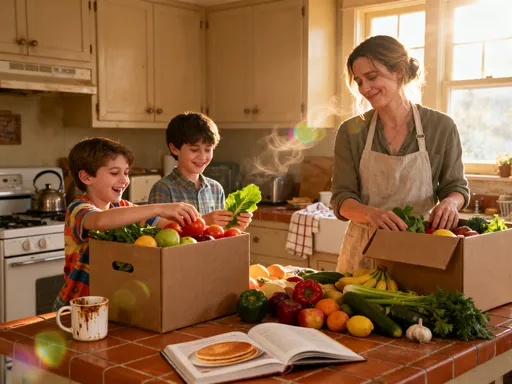
Routine is everything when you’re raising a family. And once we settled into the rhythm of delivery day, something shifted. It wasn’t just about the food—it was about the predictability. Every Friday, around 4:30 p.m., the doorbell would ring. The kids learned to listen for it. “It’s veggie day!” my daughter would shout, racing to the porch. We’d unpack the box together, like it was a shared ritual. They’d name the vegetables, smell the herbs, and argue over who got to carry the potatoes to the kitchen.
Meal planning, which used to feel like a chore, became intuitive. I’d glance at the contents of the box and know what we could make—stir-fry with the bok choy and snap peas, roasted root vegetables with the beets and sweet potatoes, a big salad with the mixed greens and cucumbers. I wasn’t staring into an empty fridge, stressed about what to cook. I was working with what was there, creatively and calmly. And because the produce was so fresh, it lasted longer. We wasted less. I started freezing extras—chopped peppers, roasted tomatoes—and building a little pantry of homemade basics.
The ripple effects surprised me. With less time spent shopping and more time at home, we began having dinner together more often. No more eating over the sink while helping with homework. We sat down, talked about our days, laughed at the kids’ stories. That simple act—eating together—became a cornerstone of our week. And I noticed something else: I was cooking more, trying new recipes, feeling proud of what I made. It wasn’t because I suddenly had more energy. It was because the system supported me. The tech didn’t replace me. It empowered me.
When Tech Meets Touch: The Human Side of Digital Delivery
One thing I’ve learned is that the best technology doesn’t feel like technology at all. It feels like help. And what made this experience different from other apps was the human touch behind it. I remember one week, I accidentally ordered two boxes instead of one. Before I could panic about the cost, a real person emailed me—no bots, no automated scripts—and offered to refund one delivery. They even asked if I wanted to donate the extra produce to a local food bank. I said yes, and they arranged it. That small act of kindness made me feel respected, not just processed.
Another time, I left a note asking for “something fun and new” in the box. The next delivery came with a bundle of purple asparagus and a handwritten card: “Thought you might like to try something different. Roast with olive oil and lemon—it’s a staff favorite.” I loved that. It wasn’t just food. It was connection. I started recognizing the delivery driver, too—a woman named Maria who always smiled and remembered my kids’ names. When we had a delivery issue, I called customer service and spoke to a real person who listened, apologized, and fixed it immediately. No hold music, no robotic prompts. Just care.
That blend of smart tech and human understanding is what made the difference. Algorithms helped with efficiency, but people made it meaningful. They knew we were a family, not just a delivery address. They accommodated last-minute changes when a birthday dinner came up, sent extra napkins when I forgot to order them, and even suggested a recipe when they noticed I kept ordering the same few items. It wasn’t artificial intelligence. It was thoughtful service, powered by technology but guided by empathy.
A New Normal: More Than Just Groceries, It’s Family Peace
Looking back, I realize I didn’t just adopt a new way to shop. I adopted a new way to live. The box of vegetables wasn’t the point. The point was what it gave back: time, calm, space to breathe. It wasn’t about outsourcing motherhood. It was about reclaiming energy so I could show up more fully in the moments that matter. I’m not more patient because I have less to do. I’m more present because I’m less drained.
This isn’t a luxury. It’s a quiet act of self-care that ripples through the whole household. When I’m not running on empty, I listen better. I laugh more. I have the mental room to plan a game night, help with a science project, or just sit with my daughter while she draws. The kitchen is no longer a source of stress. It’s a place where we connect—chopping vegetables together, tasting soup, debating who gets the last roll. And the table? It’s where we come back to each other, day after day.
Technology gets praised for big revolutions—smart homes, self-driving cars, instant communication. But sometimes, the most powerful tech is the kind that simply removes friction from ordinary life. It doesn’t dazzle. It supports. It lets you focus on what you care about most. For me, that’s my family. I didn’t need a miracle. I needed a system that worked with my real life, not against it. And now, when the doorbell rings on Friday afternoon, I don’t feel dread. I feel relief. I feel hope. I feel like we’re getting it right, one delivered box at a time.