I kept saying 'I’ll remember that'—now this app saves my thoughts before I lose them
We’ve all been there—walking into a room and forgetting why, or hearing a loved one share a story we never want to forget, only to lose pieces of it by the next day. Our memories fade, but what if technology could help us hold on? Not in a flashy, futuristic way, but gently, like a quiet helper in the background. This is how my journey with online learning platforms began—not for courses or certificates, but as a surprising tool to capture, organize, and preserve the moments and ideas that matter most. It wasn’t about memorizing facts or earning a degree. It was about holding onto the warmth of my mother’s laugh when she told me about her childhood, or the exact way my son described his first day of school. I didn’t need more information. I needed to remember what I already knew—before it slipped away.
The Moment I Realized My Memory Was Slipping
I remember the exact moment I felt a quiet panic set in. My youngest had just learned to ride her bike, and as she wobbled down the driveway, she shouted, 'Look, Mama, no hands!' I laughed, heart full, and said, 'I’ll remember this forever.' But two weeks later, when I tried to recall the sound of her voice, the exact tone of her excitement, it was gone. Faded. Like a photograph left in the sun. That’s when it hit me—I say 'I’ll remember that' all the time, but I don’t. Not really. The details blur. The emotions soften. The moments I want to keep close drift into the background noise of daily life.
It wasn’t just the small joys. I started noticing how often I forgot the important things people told me. My sister once shared a story about our grandmother—how she used to hum while kneading bread, how she always saved the corner piece because it was crispier. I nodded, absorbed in the moment, thinking, 'This is precious.' But the next day, I could only recall the gist. The rhythm of her voice, the way her eyes softened—that was gone. I felt a pang of guilt. These weren’t just stories. They were pieces of who we are. And I was losing them.
Stress made it worse. Between managing schedules, helping with homework, and keeping up with work, my mind felt like a browser with too many tabs open. I’d walk into the kitchen and pause, confused. Why am I here? I’d forget appointments, misplace my phone three times a day, and struggle to recall names at family gatherings. It wasn’t memory loss in the clinical sense, but it was enough to make me worry. Was I just getting older? Was I too distracted? Or was I simply not giving myself the tools to remember? That’s when I started looking for a better way—not to fix my brain, but to support it.
How Online Learning Platforms Became My Unexpected Memory Keepers
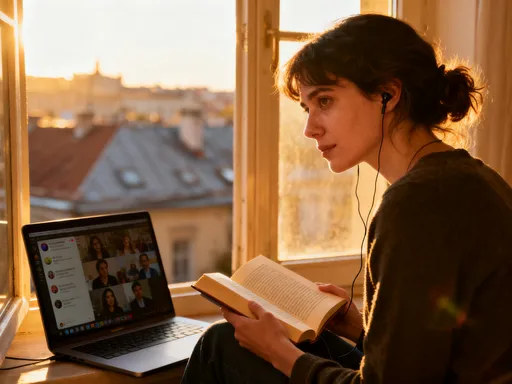
I didn’t expect my solution to come from online learning platforms. Honestly, I used to think of them as places for people trying to change careers or earn certifications. I’d signed up for a few in the past—mostly for cooking classes or time management courses—but I never stayed long. Then one day, while taking a short course on mindfulness, I noticed something different. The platform had a built-in journal feature. After each lesson, it prompted me to reflect: 'What stood out to you?' 'How can you apply this today?' 'What emotion came up for you?' I started writing—not just about the course, but about my life. I wrote about how the lesson reminded me of a conversation with my dad, or how the breathing exercise helped me stay calm during a tough afternoon with the kids.
What surprised me was how natural it felt. Unlike a blank notebook or a note-taking app that demanded I come up with structure, this platform guided me. It asked questions that helped me dig deeper. And because I was already in the habit of logging in for the course, adding my thoughts took less than five minutes. I didn’t have to remember to remember. The system did it for me. Soon, I began using the voice memo feature too. If I was driving and a memory popped into my head—like the way my daughter used to sing 'Twinkle, Twinkle' in the bathtub—I’d press record and speak it into the app. Later, when I listened back, it wasn’t just words on a screen. It was my voice, full of feeling, capturing the moment exactly as it happened.
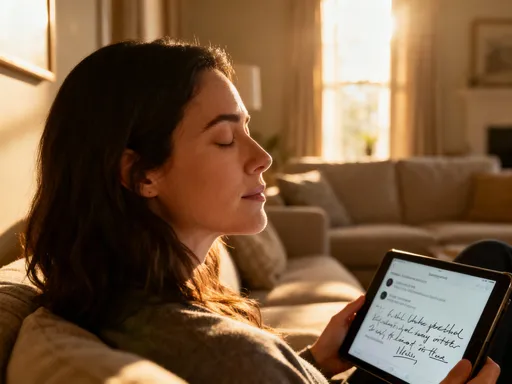
Over time, I realized I wasn’t just learning about mindfulness. I was building a personal archive of thoughts, emotions, and stories. The platform’s organization tools—tags, folders, search—made it easy to find things later. I could search 'grandma’s recipes' and pull up every note where I’d mentioned her. I could filter by date or emotion. It wasn’t about collecting data. It was about creating a living record of my inner life. And the best part? It didn’t feel like work. It felt like talking to a friend who always remembers the details.
Turning Lessons into Lasting Keepsakes
One day, I was going through old entries and stumbled on a reflection from a parenting course I’d taken months earlier. I’d written about a tough week—the kids were sick, I was exhausted, and I’d snapped at my husband over something small. In the journal, I described how I apologized, how we sat on the couch and talked about what we each needed. I’d tagged it 'growth' and 'forgiveness.' Reading it months later, I didn’t just recall the event. I felt it. The guilt, the relief, the love. It was like reading a letter from my past self.
That’s when I realized these weren’t just course notes. They were keepsakes. Emotional snapshots. And I started treating them that way. I began tagging entries not just by topic, but by feeling—'joy,' 'grief,' 'pride,' 'gratitude.' I created a special folder called 'Voices from Home' where I saved audio clips of family stories. My mother telling the tale of how she met my father. My son describing his dream of becoming a pilot. These weren’t just memories. They were heirlooms in the making.
The most unexpected gift came when I shared some of these with my parents. I sent my mom a short audio clip of me reading back a note where I’d written about how much I admired her strength during hard times. She called me the next day, voice trembling. 'I’ve never heard you say that out loud,' she said. 'It means more than you know.' That moment changed everything. This wasn’t just about me remembering. It was about connection. About showing people they matter. About leaving behind something real.
Teaching My Kids to Remember, Too
If this was helping me, I thought, could it help my children too? Not in a formal way, but as a gentle habit—something that felt natural, not forced. I started by showing my daughter how to use a kid-friendly learning app to record her thoughts after school. At first, she’d just say things like, 'Today we learned about frogs,' but soon she began adding details—'My friend Lily let me borrow her crayons when mine broke. I felt happy.' I encouraged her to use voice notes when she didn’t feel like typing. 'Just talk,' I’d say. 'It’s like leaving a message for future you.'
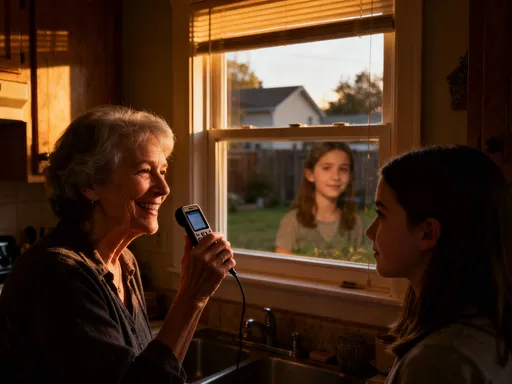
Then came a school project about family history. Her assignment was to interview a relative and present what she learned. Instead of writing it down or making a poster, she asked if she could use the app to record her grandmother telling stories. I helped her set it up—simple questions, a quiet room, a charged device. Over two afternoons, my mom shared memories of growing up in a small town, of walking to school in the snow, of learning to sew from her own mother. My daughter listened, asked follow-up questions, and recorded it all.
When she played it back for her class, something beautiful happened. Her classmates were captivated. Her teacher said it was the most heartfelt project she’d ever seen. But more than that, my mom felt seen. She told me, 'I didn’t know my stories mattered to anyone anymore.' That project became more than a grade. It became a bridge between generations. Now, my daughter regularly records little moments—her first goal in soccer, a funny thing her brother said, a drawing she’s proud of. She’s not just learning to remember. She’s learning to value her own life as it happens.
Building a Personal Knowledge Garden, Not Just a Storage Bin
I used to think of memory preservation as dumping things into a box—notes, photos, voice memos—just to keep them safe. But what I’ve learned is that memories aren’t meant to be stored. They’re meant to be tended. Like a garden, they need care, attention, and regular visits. Online platforms helped me shift from hoarding to cultivating. Instead of just saving, I started revisiting. I’d go back to old entries, read them aloud, reflect on how I’ve changed. Sometimes, I’d connect ideas—linking a note from a course on resilience to a recent challenge at work. The platform’s search and tagging features made these connections easy.
One day, I was struggling with a decision about whether to take on a new project at work. I felt overwhelmed, unsure if I had the energy. Out of habit, I searched my journal for 'overwhelm.' Up came an entry from two years ago, when I’d felt the same way about homeschooling during the pandemic. In it, I’d written, 'I don’t have to do it all. I just have to do the next right thing.' Hearing my own voice say that—through a voice memo I’d recorded at the time—felt like a lifeline. It wasn’t just advice. It was proof that I’d been here before and found my way through.
This is the real power of these tools. They don’t just preserve the past. They help you grow from it. Every time I revisit an old insight, I’m not just remembering. I’m relearning. I’m building wisdom. And because the platform keeps everything organized, I can see patterns—how often I return to certain themes, what kinds of moments bring me the most peace. It’s not a digital graveyard of forgotten thoughts. It’s a living, breathing garden of who I am.
Why This Feels Different from Other Apps I’ve Tried
I’ve tried other apps—note-taking tools, reminder lists, voice memo folders. But they never stuck. Why? Because they lacked context. A note that says 'Call dentist' is useful, but it doesn’t make me feel anything. A reminder to 'Buy milk' doesn’t help me grow. What’s different about learning platforms is that they’re designed for reflection. They don’t just capture information. They help you make meaning from it.
The prompts alone make a difference. Instead of facing a blank page, I’m asked, 'What did you learn today?' 'What are you grateful for?' 'How did you show courage?' These questions pull me out of autopilot. They invite me to pause, reflect, and connect. And because I’m already engaged in learning—whether it’s about nutrition, creativity, or emotional intelligence—the act of journaling feels purposeful. It’s not an extra task. It’s part of the journey.
There’s also the quiet motivation of progress tracking. Seeing that I’ve completed five lessons and written ten reflections gives me a sense of accomplishment. It’s not about earning a badge. It’s about knowing I’m showing up for myself. Other apps feel transactional. This feels relational. Like I’m building a conversation with my future self. And that makes all the difference.
A Simpler, Smarter Way to Hold On to What Matters
Today, I don’t say 'I’ll remember that' as often. Instead, I say, 'Let me save this.' It’s a small shift, but it’s changed everything. I’m no longer afraid of forgetting. I don’t panic when a moment feels fleeting. I know I have a place to hold it. More than that, I’ve become more present. Because I know I can capture the details, I’m free to fully experience them. I listen more closely. I feel more deeply. I savor the ordinary.
This isn’t about replacing memory. It’s about honoring it. About giving our stories the space they deserve. In a world that moves too fast, where attention is fragmented and time feels scarce, these tools offer something rare—a way to slow down, reflect, and preserve what truly matters. They’ve helped me strengthen my relationships, understand myself better, and pass on pieces of our family’s history. They’ve turned my scattered thoughts into a coherent narrative—a story of who I’ve been, who I am, and who I’m becoming.
If you’ve ever felt like you’re losing pieces of your life, I want you to know there’s another way. You don’t need a complicated system or a tech upgrade. You just need a platform that feels like a quiet companion—something that asks the right questions, listens without judgment, and helps you hold on. Because the truth is, we all have moments worth remembering. And now, thanks to a simple shift in how I use technology, I do.