Beyond Screen Time: How Recording My Daily Work Actually Gave Me Back My Evenings
Have you ever felt like your day slips away without really living it? I used to stare at my screen, overwhelmed and exhausted, until I started using screen recording not for work reviews—but to understand my work. What began as a simple experiment revealed surprising patterns in my focus, energy, and rhythm. It didn’t just improve productivity; it reshaped my entire day. This is the story of how a small tech habit helped me reclaim time, calm, and control—without adding more to my plate.
The Breaking Point: When My Screen Became My Whole Life
There was a week last winter when I didn’t see my daughter’s school play. Not because I was traveling or hospitalized—no dramatic excuse. I was home. But I was buried under a mountain of emails, last-minute edits, and virtual meetings that kept spilling past dinner. I remember sitting on the couch afterward, the house quiet, guilt heavy in my chest. My husband handed me a plate of cold food and said, 'She asked where you were.' I didn’t have a good answer. I had been there, physically. But mentally? Emotionally? I was still in that blinking cursor, that endless inbox, that invisible loop of digital obligation.
This wasn’t a one-time slip. It had become my normal. Mornings started with a glance at my phone before my feet even hit the floor. Lunch was eaten while scrolling through project updates. Evenings meant catching up on what I hadn’t finished—because during the day, I’d been too busy looking busy. I had every tool imaginable: calendar blockers, to-do lists, focus timers. I even tried the ‘two-minute rule’ and color-coded task categories. And yet, I was more tired than ever. More frazzled. More disconnected from the life I was supposedly organizing.
What I didn’t realize then was that the problem wasn’t my tools. It was my relationship with time—and with myself. I was treating my day like a machine that needed optimization, but I wasn’t the machine. I was a person. A person with rhythms, emotions, energy waves. And no app could tell me when I was truly focused or just pretending to be. That’s when I stopped looking for solutions outside myself and started asking a different question: What if I could see how I was really spending my time—not just how much, but how?
A Simple Experiment: Pressing Record to Understand My Day
I didn’t want another tracker. I didn’t want another dashboard telling me I spent 3.7 hours on 'communication'—what did that even mean? Was I having meaningful conversations or just reacting to notifications? So I tried something strange: I turned on screen recording for two hours one afternoon. Not to share. Not to review work. Just to watch myself later, like a fly on the wall.
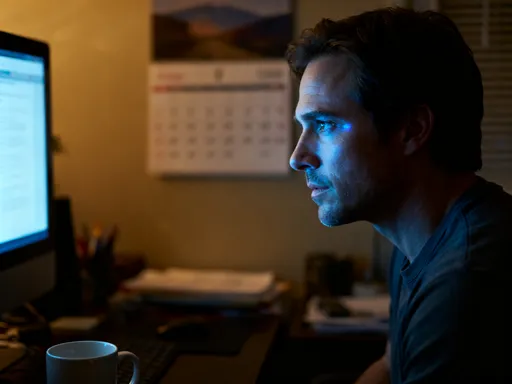
The first playback was… humbling. There I was, sitting at my desk, looking serious, typing with purpose. But within six minutes, I switched to check a news alert. Then a text. Then I opened a tab to look up a recipe for dinner—while still pretending to work on a report. I watched myself toggle between three windows, none of them the one I’d intended to focus on. And then, after 47 minutes of what I’d call 'working,' I finally closed everything and spent 12 uninterrupted minutes actually writing—quiet, focused, in flow. That was the shocker: less than a quarter of my time was real work. The rest was performance.
But here’s what surprised me most—it wasn’t just about distractions. I saw how my energy dipped after a frustrating email. How I’d reach for my phone like a reflex when I hit a mental block. How my posture slumped when I felt overwhelmed. These weren’t things a time tracker could capture. This was my inner world, projected onto the screen. And for the first time, I wasn’t guessing. I was seeing. It wasn’t about shame or judgment. It was like finally getting glasses after years of blurry vision. I could see the patterns. And once I could see them, I could change them.
Seeing the Unseen: Patterns That No Tracker Could Reveal
Over the next few weeks, I recorded just one two-hour block each day—always in the afternoon, always with the same quiet playlist in the background. I wasn’t trying to capture everything. Just enough to build a picture. And what emerged wasn’t what I expected. The data from my screen recordings told a story no productivity app ever could.
For one, I was a midday person. Not a morning person, like all the self-help books said I should be. My best focus didn’t come at 7 a.m. with a green juice and a gratitude journal. It came at 2:30 p.m., after a short walk and a cup of tea. That’s when I could write without second-guessing every sentence. That’s when ideas flowed. And yet, I’d been scheduling my most creative work for 8 a.m., when I was still half-awake and emotionally reactive. No wonder I felt stuck.
I also saw how my day was derailed by tiny decisions. The first 20 minutes of my work session? Almost always spent answering emails. Not urgent ones. Not even important ones. Just the ones that pinged first. And each reply pulled me into a reactive state, making it harder to shift into deep thinking later. One recording showed me responding to seven messages in a row—none of them requiring immediate action—before I even opened my main project file. It took me 38 minutes to get started. Thirty-eight minutes of momentum lost.
But the most powerful insight was emotional. I noticed that before every burnout moment—when I’d snap at my kids or shut down completely—I’d been ignoring physical signals: hunger, stiffness, the need to move. The screen didn’t lie. I could see the moment my shoulders tensed, the moment I stopped blinking, the moment I started typing faster but with less clarity. My body was screaming for a break, and I was hitting 'reply' instead. These weren’t time management issues. They were self-awareness gaps. And the screen recording was filling them—one quiet observation at a time.
Designing My Life Around Real Rhythm, Not Ideal Schedules
Once I could see my real rhythm, I stopped fighting it. I stopped trying to be someone I wasn’t—a hyper-efficient morning warrior or a constant multitasker. Instead, I started designing my day around what the recordings showed me was true.
I moved my creative work—writing, planning, brainstorming—to that sweet spot between 2:00 and 4:00 p.m. I blocked it on my calendar with a label that said 'Protected Focus' and treated it like a doctor’s appointment. No meetings. No calls. Just me and the work that mattered. And I began my actual day differently. No email for the first hour. Instead, I’d make tea, journal for five minutes, and open one priority task—just one. If an idea for something else came up, I’d jot it down and return to it later. No more jumping between tabs before my brain was ready.
I also started ending my workday with a five-minute playback of that afternoon’s recording. Not to critique. Not to count distractions. Just to reflect. What worked? What felt heavy? Where did I lose flow? It became a kind of digital mindfulness practice. Some days, I’d notice I’d been in flow for 45 minutes straight. Other days, I’d see that I’d been distracted every 10 minutes—and instead of beating myself up, I’d ask, 'What was I avoiding?' Maybe the task was too big. Maybe I was tired. Maybe I needed to talk to someone. The recording didn’t shame me. It helped me care for myself.
The magic wasn’t in the technology. It was in the shift it created. I wasn’t managing time anymore. I was honoring my energy. And that made all the difference. Structure didn’t feel rigid. It felt like relief. Like I was finally working with myself, not against.
Sharing the Screen: Strengthening Work and Home Boundaries
I didn’t think I’d ever share these recordings with anyone. They felt too personal, too revealing. But then I tried something small. I recorded a three-minute clip of me walking through a project update—just my screen, my voice explaining the next steps, and a quick demo of the changes. I sent it to my team instead of scheduling a meeting.
The response? 'This is amazing. So clear. We don’t need a call.' That one clip saved us all an hour. And it wasn’t just efficient—it was empowering. I wasn’t asking for feedback in a vague email. I was showing exactly what I meant. No miscommunication. No back-and-forth. Just clarity. I started using these short screen videos for handoffs, quick explanations, even training new team members. It became our go-to for asynchronous communication. And it built trust—because I wasn’t hiding behind words. I was showing my process.
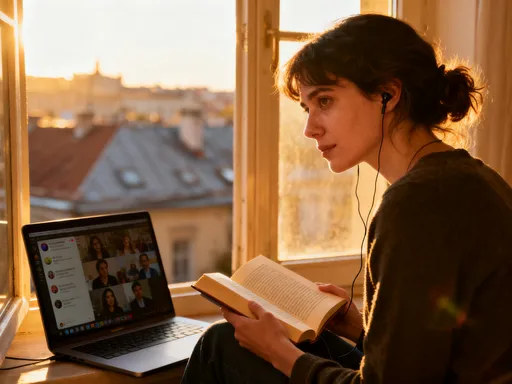
Then, one evening, I showed my partner a short, playful clip of my 'focus zone'—me with headphones on, typing, the sun coming through the window. I called it 'A Day in the Life of Mom’s Office.' I added a silly caption: 'Do not disturb unless it’s an actual emergency (or cookies are ready).' He laughed. But then he said, 'I had no idea you worked like that. I thought you were just sitting there.' That opened a conversation we’d never had before—about presence, about mental load, about what it really means to be 'busy.'
From then on, we started using little signals. If I was in a focus block, my headphones were on. If he saw me pacing or staring at the wall, he knew I was thinking, not ignoring him. The screen recording didn’t just change my work—it changed my home life. It gave us a shared language. It made the invisible visible. And that made space for more connection, not less.
From Habit to Harmony: Letting Go of Perfect Productivity
After about three months, I stopped recording every day. Not because I didn’t care anymore. Because I didn’t need to. The habit had done its job. It had rewired my awareness. Now, I can feel when I’m in flow. I can sense when I’m forcing it. I don’t need a video to tell me when I’m distracted—I notice the urge to check my phone, the tension in my neck, the mental fog.
And here’s the beautiful part: I’m not chasing productivity anymore. I’m chasing presence. I want to be here—for my work, for my family, for myself. I still have busy days. I still have moments of stress. But now, I respond differently. Instead of pushing through, I pause. I stretch. I take a walk. I protect the quiet. I savor the unplanned moments—like when my daughter sits beside me while I work, drawing quietly, or when my husband brings me a cup of tea without asking.
I used to think technology was the enemy of calm. I thought screens were stealing my time, my focus, my life. But I’ve learned it’s not the tools—it’s how we use them. When used with intention, technology can help us slow down. It can help us see ourselves more clearly. It can help us design a life that fits, not one we have to squeeze into.
I don’t measure success by how much I get done anymore. I measure it by how I feel at the end of the day. Calm? Connected? Creative? Those are my real metrics now. And the irony is—by letting go of perfect productivity, I’ve actually become more effective. Not because I’m doing more. Because I’m doing what matters, in the way that works for me.
Your Turn: Starting Small to See Big Change
If this resonates with you—if you’ve ever felt like your day is running you, not the other way around—I want to invite you to try something. Just one day. Pick one focused work block—maybe 90 minutes, maybe two hours. Turn on screen recording. No rules. No pressure. Just press record and go about your work as usual.
Then, later—when you’re calm, curious, not rushed—watch it. Don’t judge. Don’t cringe. Just observe. What do you notice? When do you focus? When do you drift? How does your body respond? What triggers a shift in your energy? This isn’t about surveillance. It’s about self-discovery. It’s about giving yourself the gift of awareness.
You don’t need fancy software. Most laptops and phones have built-in screen recording. No audio? That’s fine. Just watch your screen. No one else has to see it. This is for you. And if you’re nervous, start even smaller. Record just 30 minutes. Or try it once a week. The point isn’t perfection. It’s insight.
Because here’s what I’ve learned: when we stop trying to fix ourselves and start seeing ourselves, everything changes. We stop fighting our rhythms and start honoring them. We stop chasing time and start living it. And we realize—technology doesn’t have to steal our evenings. It can help us get them back. One quiet observation at a time.